How to Easily Create Standard Operating Procedures that Don’t Collect Dust

Jeff Loehr January 2, 2023
A standard operating procedure (SOP) sounds like a bureaucratic burden. In fact, it is essential to growing your business.
A standard operating procedure (SOP) is the standard way that you complete a task. It is a series of steps you follow every time you do something. By defining an SOP, you take the guesswork out of delivery and create a process that you can measure, replicate and automate.
The SOP is the systematization of a process.
An SOP is MORE than a process; it protects your brand and engages your people.
If you don’t have a standard way of operating and hire people to do work, they will spend all of their time doing it. They will become swamped, but they don’t necessarily deliver useful results.
The SOP provides the instructions that people need to do their work. This means that they can operate in a way that is consistent with your brand. It also ensures that any dependencies are taken care of. If one process is highly dependent on another, you can use SOPs to ensure that the timing and quality of step one meet the needs of step two.
Dynamic SOP’s
It is a bit paradoxical to think that you should keep your SOP dynamic. But one feature of the SOP is that it helps you to measure your performance. That means that it should also give you clues to enhancing your performance.
So: your SOPs must change and adjust over time. They get better and better and your organization, as a result, gets smarter and smarter.
The SOP Builder, how to create an SOP
Here is a short video on how to create your SOP:
A checklist is also a good tool
The tools above are great for thinking through SOPs, and we find them useful in creating SOPs.
But we have also found that the tried and true checklist is a powerful tool. We create lots of checklists in Asana, both in terms of creating templated tasks and templated projects.
One of our checklists for onboarding a new platinum client looks like this:
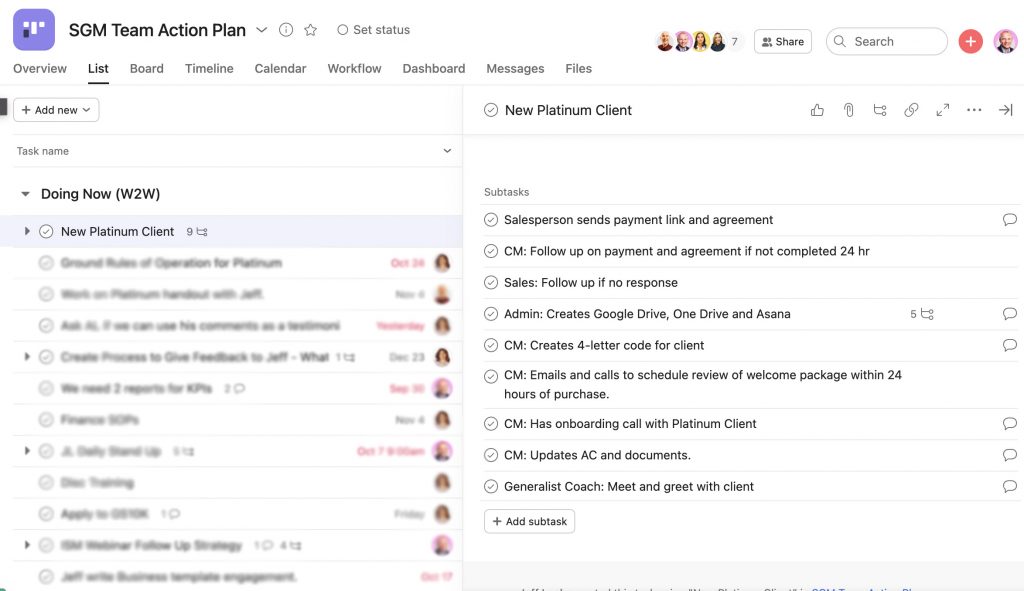
Or it did at the time I took the screenshot – by now, we’ve probably evolved it; that is how these things go.
The beautiful thing about creating templates in Asana is that you can easily use them to create new projects and tasks, assign them to others and automate a part of the process. You can add tons of detail within the Asana task or add detail to Tettra and reference it from the Asana task.
We use a combination. What works for us is to have task-specific descriptions in Asana and more long-winded explanations of the why and how in Tettra. Don’t worry too much about this; your task now is to get started and sort out some of these details over time.